The Famous 4Cs
You've heard about them, but what do they mean? Does cut refer to the shape of a diamond? What's the best color? What does Clarity mean? Is Carat weight the most important consideration?
Here's What You Need To Know
If you thought that Cut refers to the shape of a diamond, you thought wrong. But do not despair, this is a common point of confusion that many people have about diamonds.
The Cut of a diamond actually refers to the expertise with which a diamond is cut. Most diamonds, regardless of size or shape, are cut with 58 facets, which allow the reflection of light that results in the sparkle of a diamond. A Master Cutter will cut a diamond in such a way that will maximize the amount of light reflected, increasing the sparkle. Thus, the better the Cut – or "make", the better the sparkle.
The Best Color
The best color you can choose for a diamond is "colorless". When a diamond is totally devoid of color, it will act as a prism which allows the maximum of light to pass though, resulting in a virtual rainbow of brilliant color. Diamonds found in nature range from colorless to slightly yellow, to brown. The color grading system uses the letters in the alphabet ranging from "D" – which stands for the most colorless, therefore the most valuable, all the way to "Z" which has the most color within the normal range. A diamond's color is best determined by having your jeweler show it to you under controlled lighting and comparing it to the Gemological Institute of America's scale, which is based on a set of diamonds in the known colors.

A Word About Fancy Color Diamonds
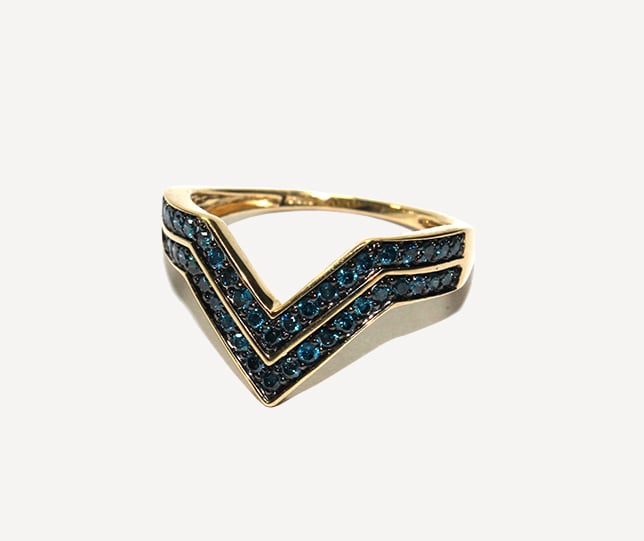
These are unique, intensely colored diamonds such as yellow or blue that are not graded on the same scale as colorless diamonds.
The Grades of Clarity
The best grade you can give a diamond is an "FL" which stands for Flawless – a truly rare condition of nature. A diamond's clarity refers to the quantity, size and position of natural inclusions that occur inside a diamond. The fewer and less noticeable the inclusions, the more valuable the diamond. Diamonds are inspected for flaws, or inclusions, under a 10x magnification, and are graded as follows:

Choosing Carat Weight
A diamond's size is referred to by its carat weight. Carat is not to be confused with Karat, which is the standard of measure for the purity of gold, and has no relationship to diamonds. A carat is a unit of measurement equal to 200 milligrams. One carat is divided into 100 points, so that a diamond of 50 points weighs .5 carats, and a diamond of 175 points weighs 1.75 carats. Although a large diamond is considered desirable, a true connoisseur recognizes that one must consider all the 4 Cs – and that a smaller diamond of a higher clarity and color may be more valuable than a larger one of a lesser grade of clarity or color.
For more information about the 4 Cs, visit these sites: Gemological Institute of America and the EGL USA Gemological Laboratory.
Talk to an Expert TodayFrequently Asked Questions
General FAQs About the 4 C's of Diamonds
The 4 C's of diamonds are Cut, Color, Clarity, and Carat Weight. These four characteristics determine a diamond's quality, beauty, and value.
The 4 C's help you compare diamonds and understand what affects their price and appearance. Knowing the 4 C's ensures you choose the best diamond for your budget and taste.
Cut is often considered the most important because it affects a diamond's brilliance and sparkle more than any other factor.
Look for a well-balanced combination of the 4 C's: excellent cut, near-colorless color, eye-clean clarity, and a carat weight that fits your style and budget.
For best value, choose an excellent or very good cut, G–H color, SI1–SI2 clarity (eye clean), and the highest carat weight within your budget.
FAQs About Diamond Cut
Diamond cut refers to how well a diamond's facets interact with light. It impacts sparkle, brilliance, and fire.
The round brilliant cut is considered the best for maximizing sparkle and light return.
Yes, cut significantly affects price. A well-cut diamond can appear larger and more brilliant than a poorly cut diamond of the same carat weight.
FAQs About Diamond Color
Diamond color is graded from D (colorless) to Z (light yellow or brown). The less color, the higher the grade.
D–F color diamonds are colorless and most desirable, but G–H offer a great balance of quality and value.
It depends on preference. Many people choose near-colorless diamonds (G–H) because they appear white but cost less than colorless grades.
FAQs About Diamond Clarity
Clarity refers to the presence of internal inclusions and external blemishes in a diamond. The fewer, the better.
Flawless (FL) is the highest, but VS1–VS2 or SI1 are great options that appear flawless to the naked eye.
Yes, SI1–SI2 diamonds offer great value and can be eye-clean, depending on the cut and placement of inclusions.
FAQs About Diamond Carat
Carat is the measurement of a diamond's weight. One carat equals 0.2 grams.
A 1-carat round diamond is about 6.5mm in diameter, though size can vary based on cut.
Not necessarily. A higher carat diamond can look dull if it has poor cut, color, or clarity. Balance all 4 C's for the best quality.
Most engagement rings feature diamonds between 0.75 and 1.5 carats, depending on style and budget.