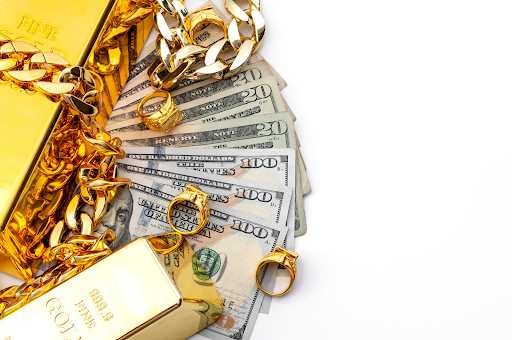
You’ll find the strongest offer for your gold by comparing buyers that assess both its metal content and its potential value as jewelry. Ask local jewelers, gold buyers or coin dealers for written quotes on the same day and compare the final amount you’ll receive after any deductions.
How payouts are actually calculated
Every legitimate offer for gold boils down to four factors:
- Purity (karat): 24K is pure gold. Most jewelry is 10K, 14K, or 18K, which means it’s alloyed with other metals for durability. The higher the karat, the more gold content—and the higher the payout.
- Weight: Buyers typically weigh in grams or pennyweights (dwt). More weight equals more value, but it must be measured accurately on a calibrated scale.
- The live market price: Gold trades on global markets and moves all day. Buyers use the current “spot” price as a starting point.
- The buyer’s margin: Every buyer takes a margin to cover refining, handling, and business costs. Transparent buyers explain this margin up front.
The formula most places use looks like this:
(Weight) × (Purity %) × (Spot Price per unit) × (Buyer’s payout rate)
For a 14K chain, calculate the gold content by multiplying its relevant metal weight by 14 divided by 24. Apply the current pure gold price in matching units, then apply the buyer’s payout percentage. Ask for any separate deductions before comparing final payments.
Two important takeaways:
- Accuracy and transparency matter. A small “error” in karat testing or scale calibration can shave real money off your offer.
- Payout rate is everything. Some buyers advertise “top dollar” but quietly take a deep margin. Others explain their numbers and still pay more. Always ask how they calculated your quote.
Who typically pays more and who doesn’t
Let’s compare the most common options:
Pawn shops
Convenient and fast, but pawn operations are built around short-term loans and reselling a wide variety of goods. Their gold payouts often reflect higher overhead and risk. Translation: the margin can be wider, so your check may be smaller.
Mail-in gold services
They promise quick, easy cash—just drop your jewelry in the mail. The downside? You can’t observe the testing, and lower initial offers are common. Returning items if you decline an offer can also be a hassle.
Online marketplaces
You might fetch more if you sell retail to a private buyer, but it’s time-intensive and comes with safety and fraud risks. You’ll also field questions, take photos, and possibly deal with returns.
Local coin shops
Great for bullion and coins, though jewelry payouts vary. Some coin dealers offer competitive rates; others focus primarily on bullion spreads.
Reputable local jewelers
A local jeweler can evaluate gold content and may recognize value in a piece’s design, brand or condition. Ask whether your items should be assessed for resale as jewelry as well as for their metal content. Compare the written offer with other buyers’ quotes because no type of buyer guarantees the highest payment for every item.
How to get the strongest offer (step by step)
- Sort by karat. Group 10K, 14K, 18K separately. If a piece is unmarked, don’t guess—ask for a proper test.
- Remove non-gold components. Clasps, stones, and magnetic parts (often steel) can impact the weight and purity calculation. Bring stones you’d like to keep; a jeweler can often remove them.
- Know the basics. Have a rough sense of the day’s gold price. You don’t need to be an expert—just informed.
- Expect in-person testing. A good buyer will use touchstone/acid, electronic testers, or XRF analysis as needed, and explain what they’re doing.
- Ask for the math. “What karat did you confirm? What did the scale read? What payout rate are you using?” A serious buyer won’t hesitate to show their work.
- Get multiple quotes the same day. Since spot moves, compare apples to apples.
- Bring ID. Most states require it for precious-metal transactions. It speeds things up.
- Decide on timing. If gold’s on a hot streak, you might capture a better price—but waiting carries risk if the market dips. If you’re ready to sell, a great payout today beats chasing a maybe-higher price tomorrow.
Red flags to watch for
- Back-room testing you can’t observe
- Unwillingness to explain the payout rate
- Uncalibrated or non-digital scales
- Pressure tactics (“this price is only good for five minutes”)
- Fees for refusing an offer or for returning your items (mail-in)
A trustworthy buyer reduces stress, shows you each step, and makes it simple to say yes or no.
Why local matters (and why it often pays more)
Working with a respected neighborhood jeweler gives you:
- Face-to-face transparency: You see the tests, the weights, and the numbers.
- Immediate payment: No mailing, waiting, or wondering.
- Fair margins: Well-run shops rely on repeat customers and reviews, not one-time windfalls.
- Options for resalable pieces: If a piece has strong design, brand, or estate value, a jeweler may price it differently than scrap—netting you more.
- Security and discretion: Private, professional transactions in a secure environment.
If you’re comparing options, talk to established gold buyers Kingston shops that value long-term relationships. Ask for their process, payout rate, and whether they pay differently for designer or estate pieces.
What about coins, bullion, and broken jewelry?
- Coins & bullion: Pricing depends on weight, purity, brand, and collectibility. Bring original packaging or certifications if you have them.
- Broken jewelry or single earrings: Still valuable for melt. Don’t toss them—small pieces add up quickly.
- Gold-filled or plated items: These contain little gold. A reputable buyer will test and separate these so you don’t get false hopes—or a confusing offer.
A quick checklist for your visit
- Items sorted by karat (if marked)
- Any certificates, receipts, or appraisals (optional but helpful)
- Photo ID
- Questions you want answered (payout rate, testing method, itemized breakdown)
- Time to compare at least two quotes
How to think about “spot” vs. “your offer”
It’s normal not to be paid 100% of spot for scrap jewelry. That’s because refining requires time and cost, and mixed lots don’t instantly convert to pure bullion. The goal is to secure a high, fair percentage of spot—and to ensure your purity and weight are measured correctly. When both are true, you’ll feel confident that you’ve captured the most possible value.
Convenience without compromise
Busy schedule? Look for a buyer who:
- Weighs and tests while you watch
- Provides a written quote
- Pays immediately via cash or check
- Explains how they handle stones you want to keep
- Welcomes second opinions (good buyers don’t mind if you shop around)
Fast should still be fair. You can have both.
Local search tips
If you’re searching online, you’ll likely type something like places to sell gold near me. As you compare, don’t just skim star ratings—read reviews that mention clear explanations, respectful staff, and transparent weigh-and-pay processes. Look for recent reviews, consistent praise for pricing, and responsive communication.
And if you’re closer to Wilkes-Barre, you might search gold buyers Wilkes Barre to find nearby options. The same best practices apply: ask for testing in front of you, get the math, and compare quotes.
Timing your sale
Gold prices can move with interest rates, inflation, and global events. While no one can predict short-term swings, here’s a smart approach:
If you’re ready to sell now: Get two or three quotes today and choose the strongest credible offer.
If you’re flexible: Track prices for a week or two and watch for an uptick—but set a decision date so you don’t miss your window.
Remember, a reputable local buyer can make the transaction quick, clear, and lucrative—without the uncertainty of mail-in offers.
The bottom line
When you combine accurate testing, transparent math, and a competitive payout rate, you get the most money for your gold. That typically points to a well-reviewed, established local jeweler—someone who buys all day, knows the market cold, and treats your items with respect.
Whether you’re selling a single broken chain or a whole jewelry box of pieces you no longer wear, a careful, informed approach pays off. Bring your items in, ask the right questions, and let the numbers speak for themselves.
If you’re looking for the best place to sell gold jewelry for cash near me, choose a local expert who values clarity as much as they value your business. When you understand the process, you win—every time.
For related guidance, explore selling to a jeweler or pawn shop and what plated jewelry may be worth.
Talk with Rainbow Jewelers in Kingston
Rainbow Jewelers is at 789 Wyoming Ave in Kingston, Pennsylvania and serves customers from Wilkes Barre, Dallas, Pittston, Scranton and the Wyoming Valley. If you’re considering selling, bring your items for an evaluation and ask how the offer is calculated. You can contact Rainbow Jewelers about your gold.
See how our gold buying service works and visit Rainbow Jewelers in Kingston for store information.
Questions about getting the most money for your gold
Where’s the best place to sell gold near me?
Start with buyers that test openly and explain their calculations. Compare local jewelers, gold buyers or coin dealers as appropriate for your items and request written offers.
How do I find the highest paying gold buyers near me?
Compare final offers for the same items on the same day. Check that each buyer used the same purity and gold weight and ask about any deductions.
Where can I sell silver and gold near me?
Rainbow Jewelers evaluates gold and silver in Kingston, Pennsylvania. Contact the store about your items before visiting if you’re unsure whether they qualify for purchase.
How does today’s gold price change what I receive?
The current spot reference is one input in the calculation. Tested purity, gold weight and the buyer’s payout rate determine how much of that metal value reaches your final offer.
Will selling gold jewelry as jewelry pay more than scrap?
It can when a piece has demand for its design, brand or collectibility. Ask for separate assessments of metal value and resale potential so you can compare the options.