Will gold prices go up in 2026? The honest answer is that gold could move higher, but the direction will depend on a small set of powerful drivers: interest rates, inflation expectations, central bank buying, the strength of the U.S. dollar, and geopolitical risk. When people ask this question, they are usually trying to decide whether to buy jewelry, invest in bullion, sell old gold for cash, or simply understand whether today’s price is unusually high. Gold is a globally traded precious metal priced primarily in U.S. dollars, and its market behavior is different from stocks, bonds, or real estate. It does not produce earnings or dividends, so its value is driven by scarcity, investor demand, and its role as a store of value.
From years of watching customers react to price swings in the jewelry trade, I can say that public interest in gold rises fast when headlines mention inflation, banking stress, or record spot prices. Buyers want to know whether to lock in a custom engagement ring now or wait. Sellers want to know if an inherited bracelet might be worth more next year. Those are practical questions, and they matter because gold touches both emotion and finance. A wedding band is not the same as a one-ounce bar, yet both are affected by the same underlying commodity market. Understanding that link is the first step toward answering whether gold prices will go up in 2026.
The phrase “Will gold prices go up” also needs context. There is a difference between short-term volatility and a sustained annual increase. Gold can rise sharply for three weeks, then give back gains just as quickly if inflation cools or the Federal Reserve signals higher-for-longer rates. Conversely, it can spend months consolidating and still end the year at a new high if central banks keep buying and real yields decline. For consumers, that means timing matters. For long-term holders, the bigger question is whether the conditions that support gold remain intact into 2026.
One more distinction matters: spot gold, futures prices, recycled gold buying prices, and retail jewelry prices are not identical. Spot gold is the benchmark market price for raw gold. A jeweler’s retail price includes design, labor, gemstones, refining losses, and markup. A gold buyer pays based on purity, weight, and market conditions, usually below spot because refining and operational costs must be covered. So when evaluating whether gold prices will go up in 2026, it helps to define which gold price you mean. For most forecasts, analysts are talking about spot gold, because that is the market base from which nearly all other pricing flows.
What usually makes gold prices rise?
Gold usually rises when the opportunity cost of holding it falls. In plain terms, when interest-bearing assets become less attractive after adjusting for inflation, gold tends to benefit. Analysts often focus on real yields, especially the yield on U.S. Treasury securities minus inflation expectations. If real yields decline, gold becomes relatively more appealing because investors give up less income by owning a non-yielding asset. This relationship is not perfect every day, but over time it is one of the most reliable frameworks for understanding gold.
The U.S. dollar is another major factor. Because gold is priced in dollars, a weaker dollar often supports higher gold prices by making gold cheaper in other currencies. The opposite can also happen: if the dollar strengthens sharply, gold may face pressure even when geopolitical risks remain elevated. In day-to-day market commentary, this is why you often see gold, the dollar index, and Treasury yields discussed together. They are interconnected signals.
Inflation and inflation fear also matter, but the nuance is important. Gold does not automatically rise every time inflation is high. What matters more is whether inflation is persistent, whether central banks are seen as losing control of it, and whether investors believe paper assets will lose purchasing power. In periods of stable disinflation with high real rates, gold can stall. In periods of sticky inflation combined with economic uncertainty, gold often attracts defensive demand.
Central bank buying has become one of the strongest structural supports for gold. Over the past several years, many central banks have increased reserves as part of diversification away from concentrated dollar exposure. This is not a short-term retail trend. It is strategic reserve management by institutions with long horizons. When official-sector demand stays strong, it can help create a floor under gold prices even if speculative flows weaken temporarily.
Key signals to watch for 2026
If you want a practical way to judge whether gold prices will go up in 2026, watch a handful of indicators rather than every market headline. Start with Federal Reserve policy. If the Fed is cutting rates because inflation is cooling without a severe recession, gold may rise moderately, especially if real yields drift lower. If cuts happen because growth is deteriorating and financial stress is spreading, gold could rise more sharply as a safe-haven asset. If inflation reaccelerates and rates stay high, the picture becomes more mixed.
Second, watch the 10-year Treasury yield and, more specifically, inflation-adjusted yields. Professional market participants often use Treasury Inflation-Protected Securities, or TIPS, as a reference. Falling TIPS yields are generally favorable for gold. Third, monitor the U.S. Dollar Index. Sustained dollar weakness would likely be supportive for gold in 2026, particularly if it coincides with slower U.S. growth or looser monetary policy.
Fourth, pay attention to central bank reserve reports and global tensions. Conflicts, sanctions, trade fragmentation, and election-related uncertainty can all push institutions and private investors toward gold. Fifth, track physical demand from key markets such as India and China, where jewelry consumption and investment demand can materially influence global flows. In my experience, when retail demand remains resilient even after price spikes, it is a sign that sentiment is broader than short-term speculation.
| Signal | Why It Matters | Typical Effect on Gold |
|---|---|---|
| Fed rate cuts | Lower rates reduce the opportunity cost of holding gold | Usually bullish |
| Falling real yields | Gold competes better when inflation-adjusted bond returns decline | Strongly bullish |
| Weaker U.S. dollar | Gold becomes more affordable for non-dollar buyers | Bullish |
| Central bank buying | Creates steady structural demand | Bullish |
| Low geopolitical risk | Reduces safe-haven demand | Often bearish or neutral |
Forecast scenarios: bullish, neutral, and bearish
A realistic gold outlook for 2026 should use scenarios rather than a single dramatic prediction. In a bullish case, inflation remains somewhat sticky, the Fed eases policy, real yields decline, and central banks continue heavy purchases. Add geopolitical instability or recession fears, and gold could push to new highs. This is the setup most often cited by analysts who expect precious metals to extend their multiyear uptrend.
In a neutral case, inflation moderates, growth slows but does not break, and interest rates decline only gradually. Under those conditions, gold could stay elevated without exploding higher. Prices might trade in a broad range, with pullbacks driven by dollar strength and rallies triggered by periodic risk events. For many consumers, this is the most likely practical environment: gold remains expensive relative to older averages, but not in a straight line upward.
In a bearish case, inflation fades faster than expected, the economy remains resilient, equity markets stay strong, and real yields remain high. If the dollar also strengthens, gold could retrace meaningfully. That would not necessarily destroy the long-term case for gold, but it could delay further gains in 2026. This is why any answer to “Will gold prices go up” must acknowledge uncertainty. Gold is influenced by macroeconomics, not just sentiment.
Most serious forecasts should also distinguish nominal and real gains. Gold can rise in dollar terms while still failing to keep pace with broader inflation-adjusted returns elsewhere. For investors, that nuance matters. For jewelry buyers, what matters more is whether delaying a purchase meaningfully changes the final price of a ring, chain, or bracelet after labor and design costs are included. In custom jewelry, gold market moves matter, but craftsmanship and gemstone quality remain large parts of the final total.
What higher gold prices would mean for buyers, sellers, and jewelry customers
If gold prices go up in 2026, investors holding bullion, coins, or gold-backed exchange-traded products may benefit first. But the effects reach much further. Jewelry shoppers would likely see higher prices on wedding bands, necklaces, bracelets, and custom engagement ring settings made in yellow, white, or rose gold. Since mountings are priced partly by metal weight and karat purity, heavier pieces in 18K or 22K are especially sensitive to market changes.
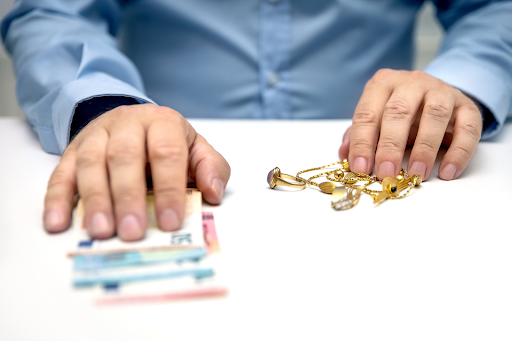
For people selling unwanted jewelry, a stronger gold market can create an opportunity. Old class rings, broken chains, mismatched earrings, and estate pieces may carry more resale value than expected, especially when evaluated for purity and net gold content. A transparent gold buyer will separate sentimental value from melt value, test karat accurately, weigh items in front of the customer, and explain how the payout relates to the current market. That process matters more when prices are volatile.
Local jewelers also help consumers make smarter timing decisions. A trusted store can explain whether it makes sense to redesign heirloom gold into a new piece, trade unused jewelry toward a purchase, or secure a custom order before another metal price increase. At Rainbow Jewelers in Kingston, Pennsylvania, serving the Wyoming Valley for more than 45 years, these are everyday conversations. Customers ask whether to buy now, repair now, or wait. The right answer depends on budget, purpose, and how much exposure the final item has to raw gold cost.
If you are considering a purchase and wondering, “Will gold prices go up,” the practical takeaway is simple: if the item is important and affordable now, waiting for a perfect dip can backfire. Gold is only one part of the equation, but when it rises, replacement cost rises with it. For current pricing, custom guidance, gold buying, or repair options, visit a reputable local jeweler and get advice based on today’s market, not speculation alone.
Frequently Asked Questions
Will gold prices go up in 2026?
Gold prices could go up in 2026, but there is no guaranteed outcome. The strongest influences are likely to be interest rates, inflation expectations, central bank buying, U.S. dollar strength, and geopolitical uncertainty. In general, gold tends to perform better when real interest rates are low or falling, when investors are worried about inflation, or when global markets are unsettled. It can also gain support when central banks continue adding to their reserves, because that creates steady institutional demand. On the other hand, if inflation cools, interest rates remain high, and the U.S. dollar stays strong, gold may struggle to move sharply higher. For most people asking this question, the better approach is not to look for a simple yes-or-no prediction, but to understand the conditions that would make a rally more or less likely in 2026.
What factors will have the biggest impact on gold in 2026?
The most important factors are likely to be monetary policy, inflation trends, central bank demand, currency movements, and global risk sentiment. Interest rates matter because gold does not pay interest or dividends, so when yields on cash and bonds are attractive, some investors prefer income-producing assets instead. Inflation expectations matter because gold is often viewed as a store of value during periods when people worry that paper currencies are losing purchasing power. Central bank buying has become increasingly important in recent years, as many countries diversify reserves and reduce dependence on the U.S. dollar. The dollar itself is a major driver because gold is priced globally in U.S. dollars, and a stronger dollar can make gold more expensive for buyers using other currencies. Finally, geopolitical risk can quickly lift gold demand if investors become more defensive. In 2026, the direction of gold will probably depend less on any single headline and more on how these forces interact over time.
Is 2026 a good time to buy gold for investment?
That depends on your reason for buying and your time horizon. If you are buying gold as a long-term hedge against inflation, currency weakness, or market stress, 2026 could still make sense even if prices are already elevated. Many investors do not buy gold because they expect it to rise every year; they buy it because it can add diversification and act differently from stocks and bonds during turbulent periods. However, if your goal is short-term profit, timing becomes much more difficult. Gold can be volatile, especially when markets rapidly reprice expectations for interest rates or recession risk. A practical approach is to avoid treating gold as an all-or-nothing decision. Some buyers choose to build a position gradually over time rather than trying to pick the exact bottom. That can reduce the risk of buying at a short-term peak while still giving exposure if prices move higher later in 2026.
Should I buy jewelry, bullion, or coins if I think gold prices will rise in 2026?
It depends on what you want from the purchase. If your primary goal is investment exposure to the gold price, bullion bars or widely recognized gold coins are usually more efficient than jewelry because they tend to carry lower markups relative to the metal value. Jewelry often includes substantial costs for design, craftsmanship, branding, and retail margins, which means the resale value may not track the spot price of gold as closely as people expect. On the other hand, jewelry offers personal use, cultural value, and emotional appeal that bullion does not. If you want a blend of wearability and value retention, higher-purity, simpler pieces may be a better option than highly ornate designer items. Coins can appeal to buyers who want divisibility, recognizability, and easier resale, while larger bars may offer lower premiums for those focused strictly on metal weight. Before buying, it is wise to compare purity, premiums, storage needs, insurance considerations, and resale options.
How can I tell whether today’s gold price is unusually high before making a decision?
The best way to judge whether today’s gold price is unusually high is to look at it in context rather than in isolation. Start by comparing the current price with recent historical ranges over one year, five years, and longer cycles. Then consider the macroeconomic backdrop: are real interest rates high or low, is inflation still a concern, are central banks buying aggressively, and is the U.S. dollar strong or weakening? A price that looks expensive on a simple chart may still be reasonable if the broader environment remains supportive for gold. It is also important to distinguish between the global spot price and the price you personally pay, especially if you are buying jewelry or physical products with dealer premiums. For people thinking about selling old gold for cash, remember that buyers usually pay based on purity, weight, and a discount to melt value, not the headline market price alone. In other words, whether gold is “high” depends on both market conditions and the specific type of transaction you are considering.