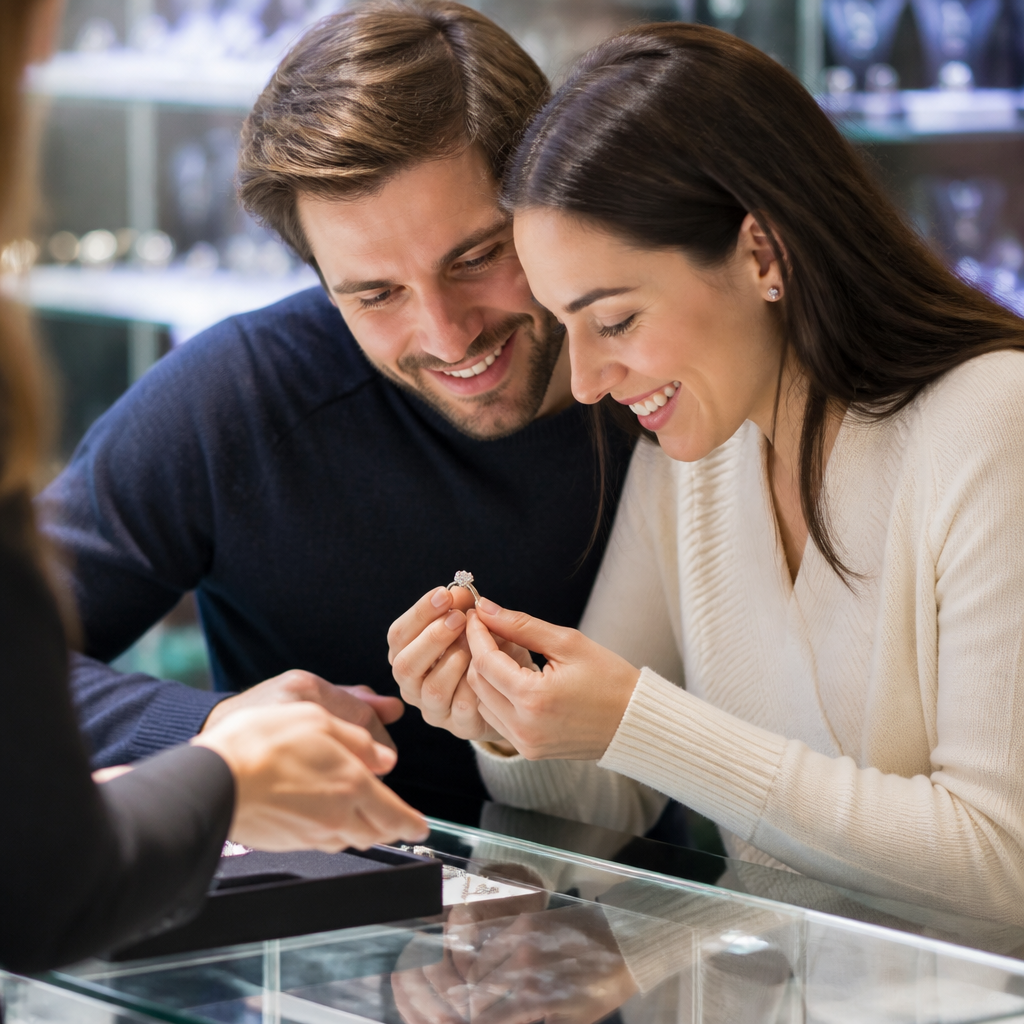
Lab created diamonds have become a practical, well-informed choice for couples in Kingston, PA who want the look, durability, and chemistry of a diamond with more flexibility in budget and design. A lab created diamond is a real diamond grown in a controlled setting rather than formed underground, which means it has the same crystal structure as a natural diamond and ranks 10 on the Mohs hardness scale. In our showroom, this is one of the first points we clarify because many local shoppers ask whether lab grown diamonds are “real.” The answer is yes. They are real diamonds, not cubic zirconia, not moissanite, and not glass.
For couples across NEPA, from Wilkes-Barre to Scranton and Hazleton, this matters because engagement ring shopping usually balances emotion, style, and budget at the same time. A lab created diamond often lets you choose a larger center stone, a better cut grade, or a more detailed setting without stretching beyond what feels comfortable. It also gives you options if you want diamond studs, wedding bands, or anniversary jewelry later. The key is understanding quality, certification, pricing, and setting choices before you buy.
This guide covers the essentials in plain language so you can shop with confidence in person near Kingston. We’ll explain how lab grown diamonds are made, how they’re graded, what affects price, and how to compare styles for real daily wear. We’ll also cover what local couples usually ask during a design consultation, including whether white gold or yellow gold works best, how to read a grading report, and when custom engagement rings make more sense than buying a ready-made mounting. If you’re building your research list, this page also connects naturally to deeper topics like custom engagement rings, wedding bands, repairs, and diamond jewelry.
What lab created diamonds are and how they are made
Lab created diamonds are produced using advanced technology that recreates the conditions in which diamonds form. The two main methods are High Pressure High Temperature, called HPHT, and Chemical Vapor Deposition, called CVD. Both methods produce diamonds that are chemically and optically the same as natural diamonds. Under a microscope, trained gemologists can detect growth characteristics, but to the eye, they look the same when quality is comparable.
That distinction matters because shoppers often confuse “lab created” with imitation stones. An imitation only looks similar. A lab grown diamond is carbon crystalized in the same basic structure as a mined diamond. It can be graded by respected labs, set in 14K gold, white gold, yellow gold, or rose gold, and worn every day in a prong setting, bezel setting, halo, or solitaire. In practical terms, it performs like a diamond because it is a diamond.
Most couples don’t need a deep engineering lesson, but they do benefit from knowing why production method can affect appearance and price. Some HPHT stones may show different trace characteristics than some CVD stones, and post-growth treatment can influence color presentation. That is why certification matters. A grading report gives you an objective record of color, clarity, cut, and measurements so you are not relying only on a showroom light or a phone photo.
How to judge quality using the four Cs and certification
The same quality framework used for natural diamonds applies to lab grown diamonds. The four Cs are cut, color, clarity, and carat weight. Cut is the most important for visual beauty because it controls how efficiently light returns to your eye. A well-cut 1.50 carat stone can look brighter and more lively than a poorly cut 2 carat stone. In our experience, couples who start by chasing size alone often change direction once they compare stones side by side in person.
Color measures how colorless the diamond appears. Many Kingston area shoppers do very well in the near-colorless range, such as G, H, or I, especially in yellow gold settings. Clarity refers to internal features called inclusions and external features called blemishes. In many cases, VS1, VS2, or SI1 offers the best balance because the stone can appear eye-clean without paying for clarity you may never notice without magnification. Carat is weight, not face-up size alone, so measurements matter too.
Look for a grading report from a recognized lab such as GIA or IGI. GIA began grading lab grown diamonds later than natural diamonds, while IGI has become common in the lab grown category and is widely seen in the trade. The report should list shape, measurements, color, clarity, cut grade when applicable, polish, symmetry, fluorescence, and inscription if present. Ask to read the report with the jeweler. A good jeweler will translate the terms, not rush past them.
| Quality factor | What it affects | Smart local buying tip |
|---|---|---|
| Cut | Brightness, sparkle, overall life | Prioritize Excellent or Ideal proportions when available |
| Color | How white the diamond looks | G to I often looks strong in white or yellow gold |
| Clarity | Visibility of inclusions | Choose eye-clean over chasing flawless grades |
| Carat | Weight and visual presence | Compare millimeter dimensions, not carat alone |
| Certification | Objective quality record | Review GIA or IGI reports before finalizing |
Why Kingston couples choose lab grown diamonds
The biggest reason is value. Lab grown diamonds usually cost less than comparable natural diamonds, often by a significant margin, which can open room in your budget for a better setting or larger stone. A couple shopping with a $3,500 to $6,000 engagement ring budget may find that lab created diamonds allow a 1.50 to 2 carat look that would be harder to reach with natural diamonds at similar color and clarity grades. That difference is meaningful for practical shoppers in Northeast Pennsylvania.
Another reason is flexibility in design. If you want a hidden halo, oval solitaire, three-stone ring, or vintage style setting with side diamonds, the center stone budget matters. We regularly see couples use lab grown diamonds to build a ring that feels custom rather than settling for a stock style. That can mean choosing a custom engagement ring through a design consultation, then pairing it with a matching wedding band later. The result feels personal without making the process complicated.
There is also a comfort factor in shopping locally and seeing options in person. Online listings can flatten the differences between stones. In a Kingston showroom, you can compare an emerald cut against a round brilliant, see how a bezel setting changes the outline, and decide whether white gold or yellow gold suits your skin tone and daily style. For many NEPA couples, that hands-on process matters just as much as the stone itself.
Choosing the right shape, metal, and setting for everyday wear
Shape changes the personality of a ring. Round brilliant remains the most popular because it offers strong sparkle and timeless appeal. Oval, cushion, pear, and radiant shapes are also in demand because they can look larger face-up and give a ring a more distinctive silhouette. Emerald and Asscher cuts show broad flashes instead of glittery sparkle, so clarity becomes more noticeable. If you work with your hands or want a lower profile, shape should be considered alongside setting height.
Metal affects both color and maintenance. White gold is a favorite for a bright, clean look, but it may need rhodium replating over time to maintain its finish. Yellow gold has become increasingly popular because it feels warm, classic, and forgiving with near-colorless diamonds. Rose gold offers softness and contrast, though it is a more specific style choice. For wedding bands, 14K gold is a strong everyday option because it balances durability and color well.
Settings matter for security and comfort. A prong setting shows more of the diamond and allows light in, but prongs should be checked over time. A bezel setting surrounds the stone and offers strong protection, which appeals to nurses, teachers, and anyone active with their hands. Halo settings add visual size, while solitaire settings stay simple and easy to pair with bands. If you’re unsure, start with how you live every day, not just how the ring looks in the box.
Questions to ask before you buy locally
Ask whether the diamond is certified, whether the grading lab is GIA or IGI, and whether you can compare multiple stones side by side. Ask to see the stone in different lighting, including softer ambient light, not only intense case lighting. You should also ask about the setting metal, ring sizing, warranty terms, and whether future services like prong checks, resizing, or stone setting are available through the store’s repair department.
If you are customizing a ring, ask how the design process works from sketch to finished piece. A reliable local jeweler should explain timing, deposit structure, CAD or model approval if used, and how center stone measurements affect the final mounting. This is especially important if you plan to match a wedding band later. Many couples in Wilkes-Barre and Scranton prefer this route because they can create a ring around the exact diamond they choose rather than forcing a diamond into a preset style.
It also helps to ask about long-term care. Even a durable diamond ring needs maintenance. Prongs wear, chains break, and bands can need resizing after years of daily use. Working with a jeweler who also handles jewelry repair and watch repair gives you a local place to return to when life happens. That continuity is one of the clearest advantages of shopping near Kingston instead of treating an engagement ring like a one-time transaction.
How this guide fits the rest of your jewelry search
Lab created diamonds are often the starting point, not the end of the conversation. Once you understand the basics, the next steps usually involve comparing custom engagement rings, exploring wedding bands, and deciding whether you want matching pieces or a more individual look. You may also branch into diamond studs, pendants, or anniversary bands later. That is why this guide works as a hub. It gives you the foundation needed before you go deeper into specific styles, budgets, and design choices.
If you are still early in the process, focus on three decisions first: shape, budget, and setting style. Then review certification and compare stones in person. If you already know you want a one-of-a-kind ring, move next to a custom design consultation. If you want to keep researching, related pages like /custom-engagement-rings, /repairs, /gold-and-silver, and /catalog can help you narrow the field and prepare better questions before you visit.
For Kingston, PA couples, lab created diamonds offer a clear advantage: real diamond beauty with more room to personalize the ring you will actually wear every day. When you understand grading, settings, and long-term service, the decision becomes much simpler. Visit our Kingston showroom to compare stones in person, talk through your ideas, and get honest guidance on the best next step for your budget and style.
Frequently Asked Questions
What is a lab created diamond, and is it a real diamond?
Yes, a lab created diamond is a real diamond. It has the same chemical composition, crystal structure, and physical properties as a diamond formed underground. The difference is origin. Instead of taking shape naturally over billions of years beneath the earth’s surface, a lab created diamond is grown in a controlled environment using advanced technology that replicates the conditions under which diamonds form. For Kingston, PA couples comparing options for an engagement ring or wedding jewelry, this is often the most important point to understand: lab created diamonds are not diamond simulants like cubic zirconia or moissanite. They are genuine diamonds with the same brilliance, fire, and sparkle people expect from traditional diamond jewelry.
They also rank 10 on the Mohs hardness scale, which means they offer the same impressive durability for everyday wear. That matters for rings that will be worn daily for years to come. In a showroom setting, many shoppers are surprised to learn that even trained professionals need specialized equipment to distinguish a lab created diamond from a natural one. If you want the look and performance of a diamond while keeping more flexibility in your budget, a lab created diamond is a practical and well-informed choice.
Are lab created diamonds durable enough for engagement rings and everyday wear?
Absolutely. Lab created diamonds are an excellent choice for engagement rings because they are just as durable as natural diamonds. Since they have the same crystal structure, they share the same hardness rating of 10 on the Mohs scale, which is the highest rating for a gemstone. That makes them highly resistant to scratching and ideal for everyday jewelry, especially rings that are exposed to frequent wear. For couples in Kingston, PA shopping for a ring that can hold up to work, family life, travel, and normal daily activity, durability is often a top concern, and lab created diamonds perform exceptionally well in that area.
Of course, no fine jewelry is completely immune to damage if it is struck hard enough, and the setting itself also plays a major role in long-term wearability. Prongs, bands, and mountings should be chosen with lifestyle in mind. A well-made setting paired with a lab created diamond gives you a beautiful and reliable ring designed for real life. Routine care, occasional professional inspections, and proper cleaning will help maintain the ring’s appearance over time, just as they would with a natural diamond. In short, if your goal is beauty with everyday practicality, lab created diamonds are more than durable enough.
Why do many Kingston, PA couples choose lab created diamonds over natural diamonds?
One of the biggest reasons is value. Lab created diamonds often allow couples to purchase a larger diamond or a higher quality diamond for the same budget they may have set aside for a natural stone. That can open up more options in carat weight, color, clarity, and cut without requiring major compromises. For many buyers, especially those balancing wedding plans, housing costs, and other financial priorities, that added flexibility makes the shopping process more comfortable and more rewarding. Instead of stretching to meet the price of a natural diamond, couples can focus on finding a ring they truly love.
Another reason is design freedom. Because the budget can often go further, shoppers may be able to choose a more intricate setting, a hidden halo, side stones, a custom design, or a diamond shape they may have thought was out of reach. For local couples who want a ring that feels personal and distinctive, that flexibility is a major advantage. Lab created diamonds also appeal to buyers who appreciate a modern, informed approach to fine jewelry. They like knowing they are purchasing a real diamond while making a decision that aligns with their priorities for style, durability, and cost. In today’s market, choosing a lab created diamond is not a compromise. For many couples, it is the smartest path to getting exactly what they want.
How do I compare lab created diamonds when shopping for an engagement ring?
The best place to start is with the same standards used for natural diamonds: cut, color, clarity, and carat weight. Of these, cut is often the most important because it has the greatest impact on sparkle and overall beauty. A well-cut diamond reflects light more effectively and will usually look more lively and brilliant than a larger diamond with a poor cut. Color refers to how white the diamond appears, clarity describes the presence of natural internal or surface characteristics, and carat measures weight. Understanding how these qualities work together can help you choose a diamond that looks stunning without paying for features that may not be noticeable in everyday wear.
It is also wise to ask about certification and grading. A properly graded lab created diamond gives you a clearer understanding of the stone’s quality and helps you make an informed comparison between options. Beyond the technical details, pay close attention to the shape and the overall ring design. An oval, round, cushion, emerald, or pear shape can each create a very different look, even at similar sizes. In person, it helps to view multiple diamonds side by side under different lighting conditions. A knowledgeable jeweler can walk you through the differences and point out where your budget will have the greatest impact. For Kingston, PA couples, the goal is not simply finding the biggest diamond, but selecting a stone and setting combination that fits your style, priorities, and daily life.
Will a lab created diamond look different from a natural diamond, and can people tell the difference?
To the eye, a lab created diamond looks the same as a natural diamond. It has the same brilliance, scintillation, and fire that people associate with diamond jewelry. In normal viewing conditions, most people cannot tell the difference, and even professionals require specialized gemological equipment to determine whether a diamond was formed in the earth or grown in a lab. That is because both are real diamonds with the same essential properties. For buyers in Kingston, PA who want a timeless engagement ring appearance, lab created diamonds deliver the classic diamond look without sacrificing beauty.
What people usually notice most is not whether a diamond is lab created or natural, but how well it is cut, how attractive the setting is, and how the ring suits the wearer’s style. A beautifully chosen lab created diamond can be every bit as elegant and impressive as a natural diamond. If appearance is your main concern, you can shop with confidence. The better question is not whether it will look like a real diamond, but which combination of size, shape, and setting will create the look you want most. With the right guidance, couples can find a ring that feels meaningful, looks exceptional, and fits their budget comfortably.